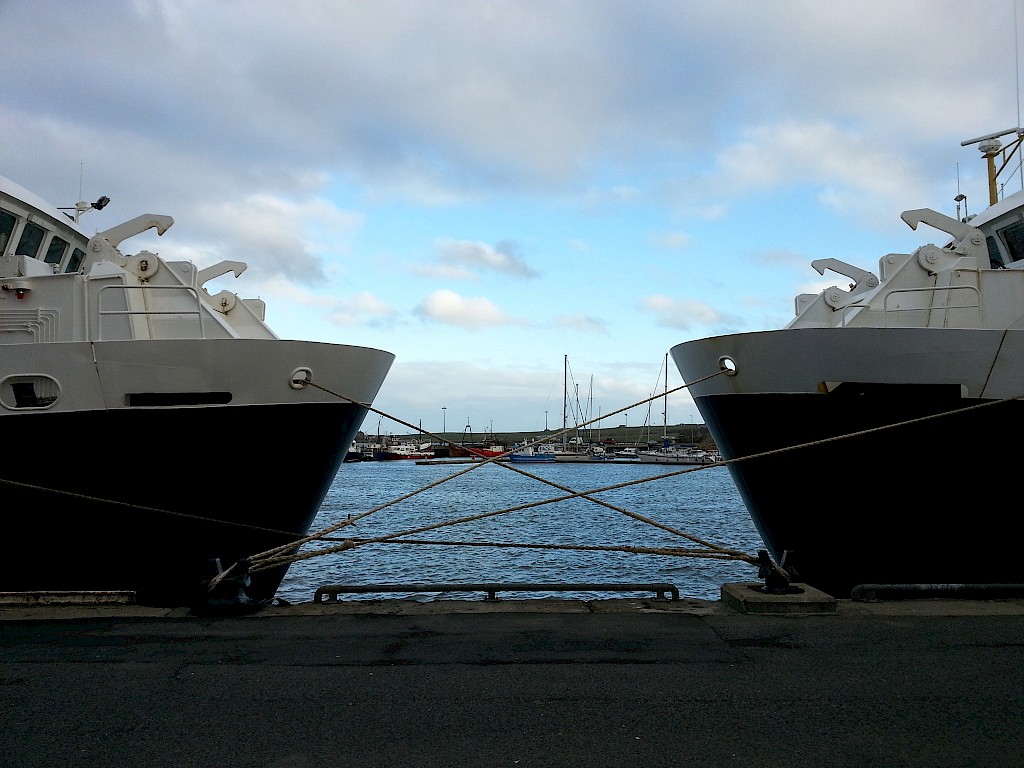
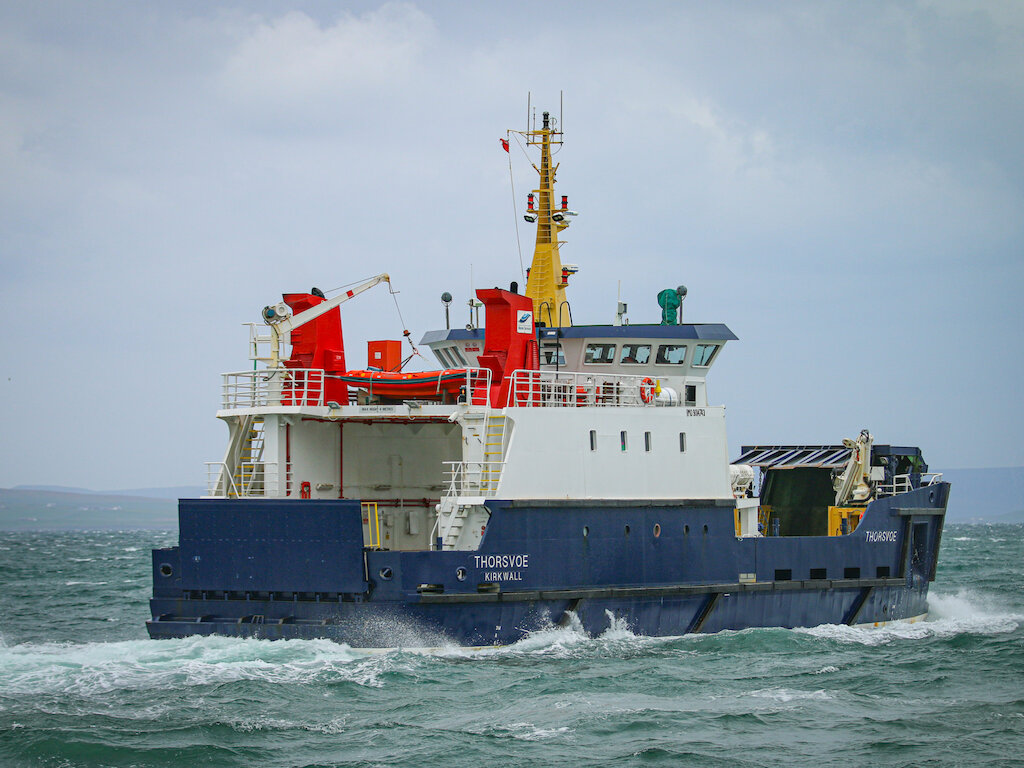
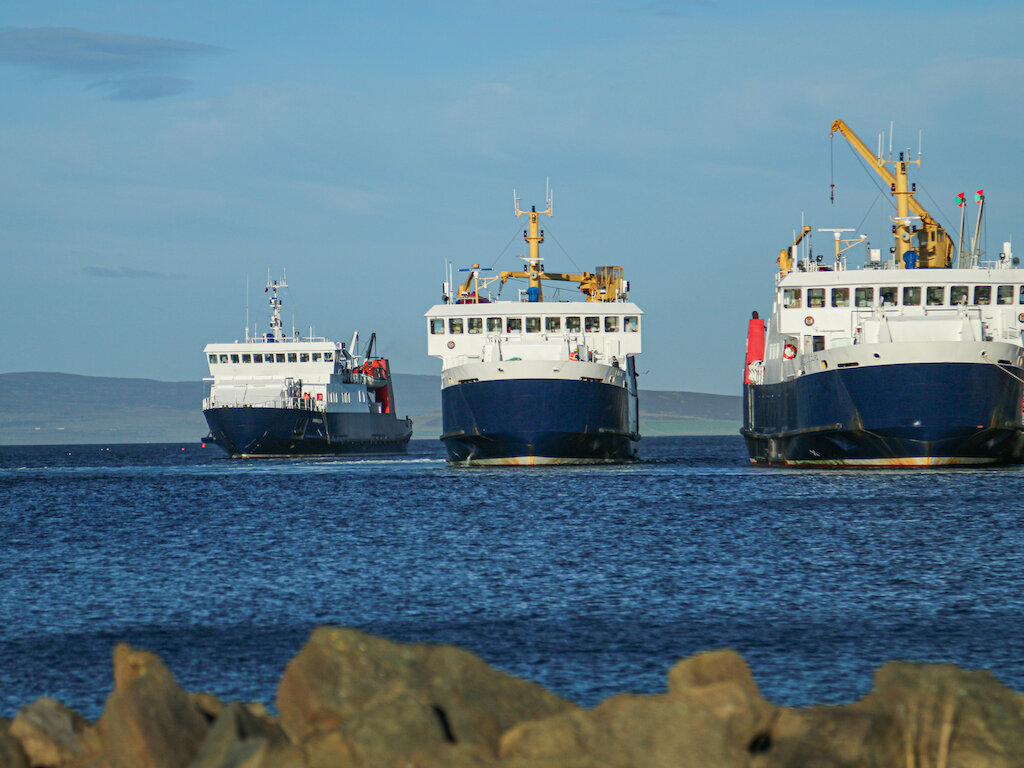
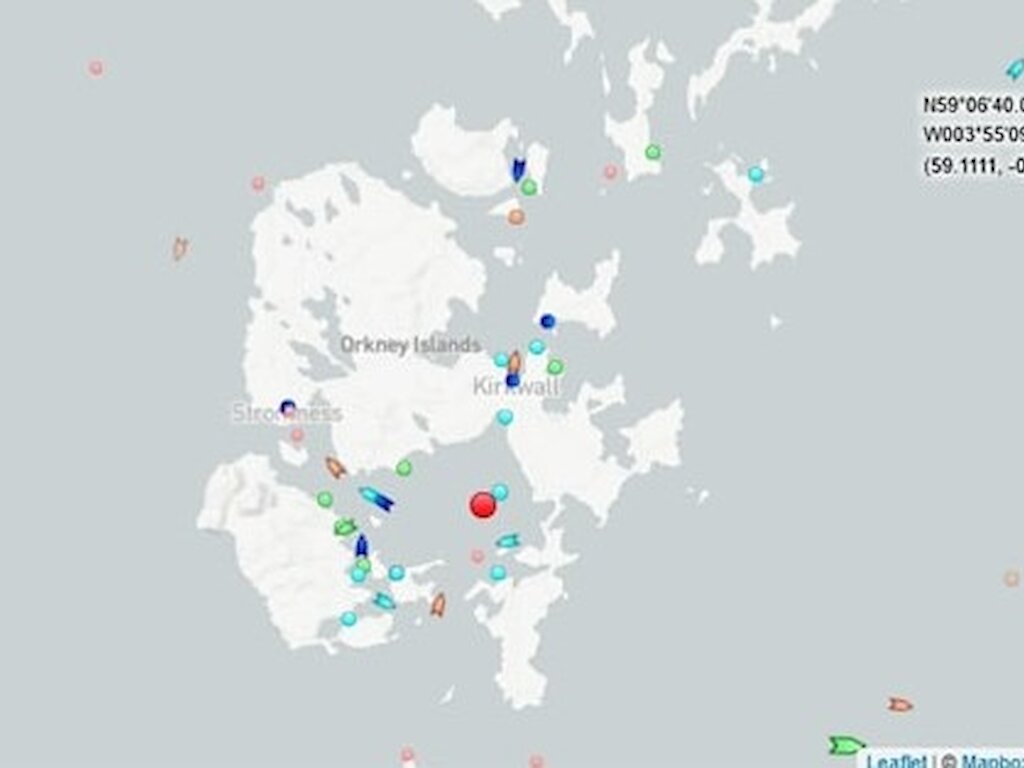
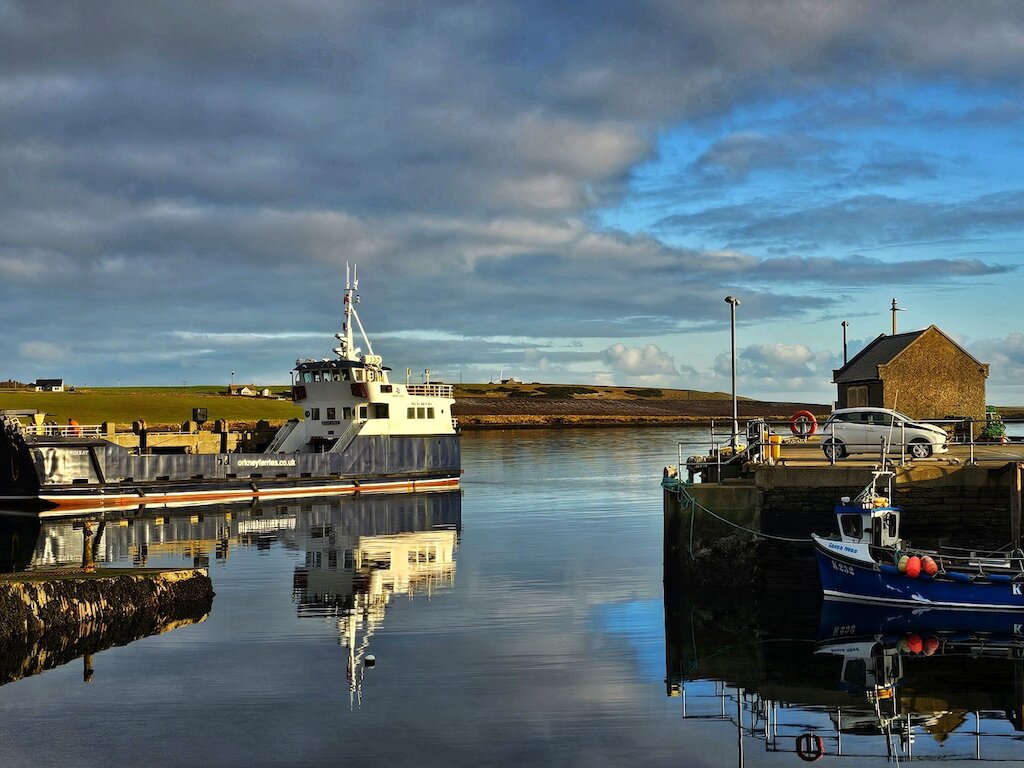
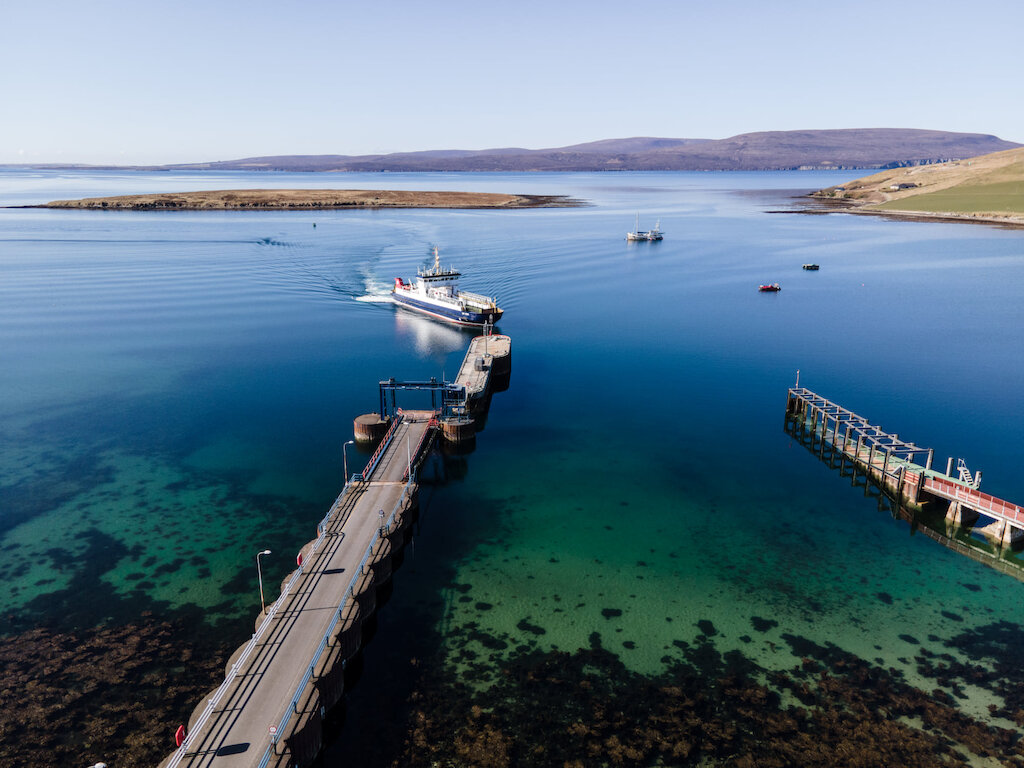
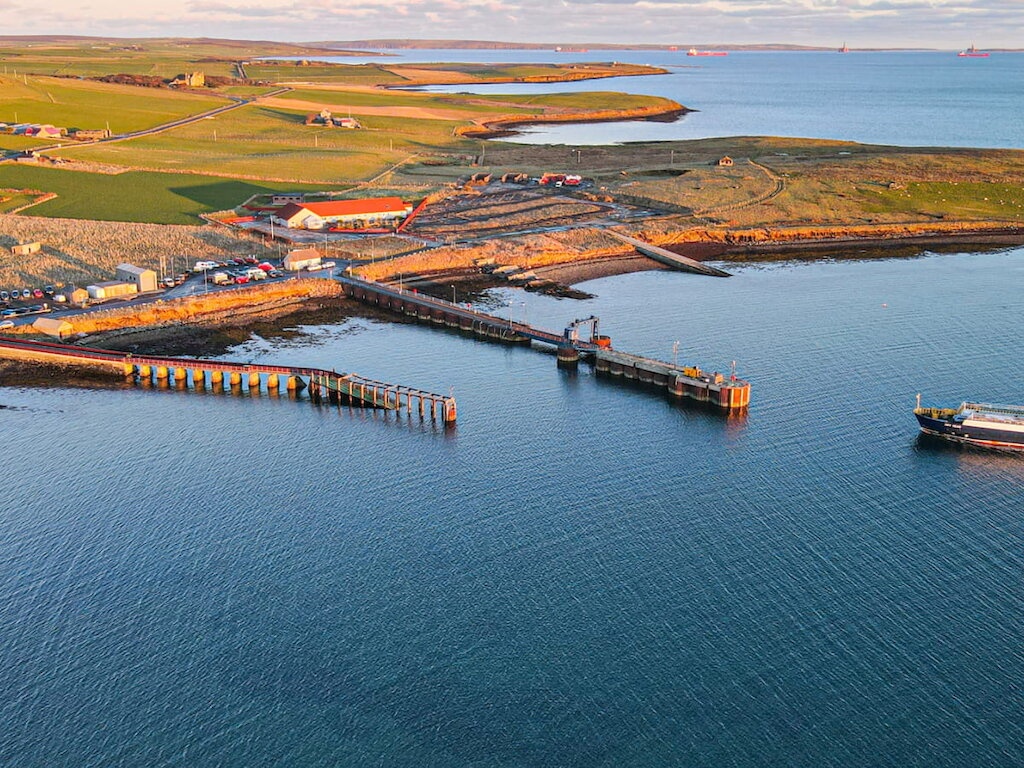
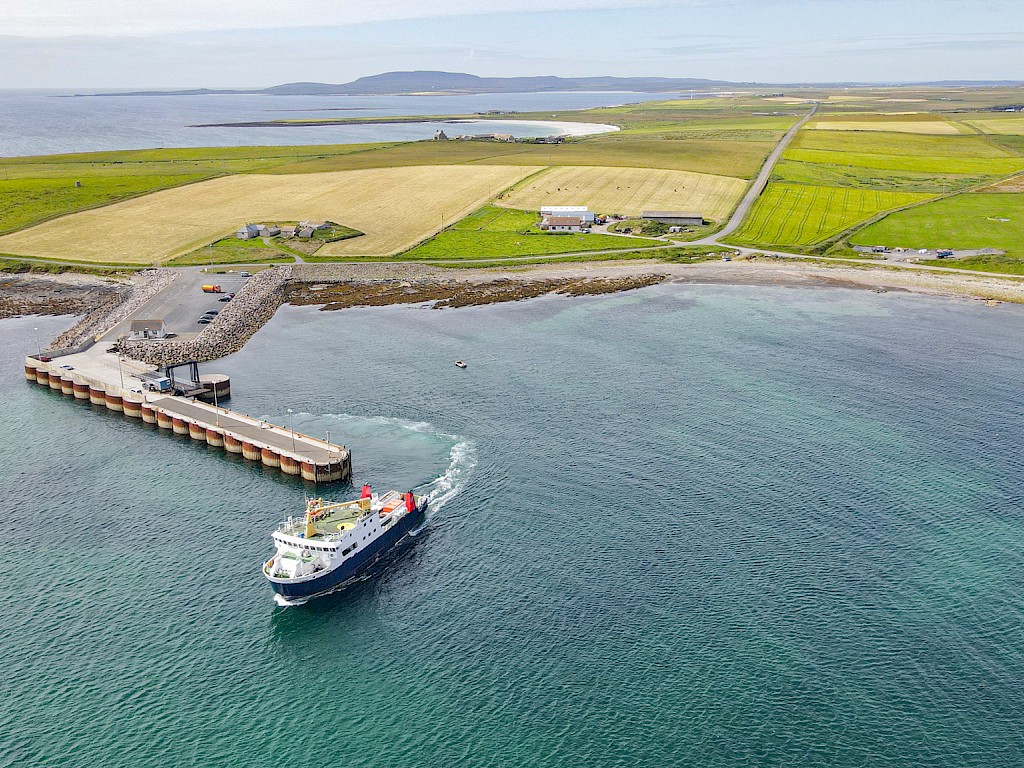
At Orkney Ferries, we carry many vehicles and loads of cargo to the Outer Orkney Islands. When commercial vehicles travel with us, we require them to be secured to the deck to ensure their safe passage as well as everything around them.
For Graemsay, Papa Westray and North Ronaldsay, we act as a haulier. Transporting goods to these isles on a regular basis through cargo sailings or, in the case of North Ronaldsay, a pre-arranged flight during our Winter Timetable.
Shipping Goods Notes are created at the time of delivery and will be handed into the Kirkwall Office for account holders. Paying customers without an invoicing account can take them directly to the office to confirm the shipment with payment.
Shipper signature required on all Shipping Goods Notes
Conditions of carriage are stated on the reverse of shipping notes as well as here.
Shipping Goods Notes are created at the time of delivery and will be sent into the Kirkwall Office for account holders.
Shipper signature required on all Shipping Goods Notes.
- Only local or essential vehicles are carried on this service due to the limitation of our deck size and weight capacity.
- Some small goods can be taken to Moaness upon special request. All larger cargo must travel via Houton to Lyness by customers’ own vehicle or haulier.
Conditions of carriage are stated on the reverse of shipping notes as well ashere.
Goods for delivery to Graemsay and North Hoy will be accepted at the Stromness (Graemsay) Pier before 11:00 on Mondays, Wednesdays and Thursdays.
Lashing Points and Secure Carriage of Cargo
To ensure all stowed cargo is carried in a secure manner, we require larger and heavier vehicles to have lashing points in accordance with our guidelines. This is for the safety of both staff, passengers and other vehicles / cargo.
Commercial vehicles which are covered by these guidelines fall under the below categories:
Vehicle Lengths
Vehicle Gross Weight
Number of Required Lashing Points
6m – 11.9m
3.5T – 40T
3 Fixed Points Per Side
12m and above
3.5T – 40T
4 Fixed Points Per Side
In accordance with ISO 9367, all road vehicles onboard Ro-Ro ships must be equipped with sufficient lashing points in relation to the size of the vehicle. ISO 9367 does not apply to passenger cars, busses and special vehicles, such as motorhomes.
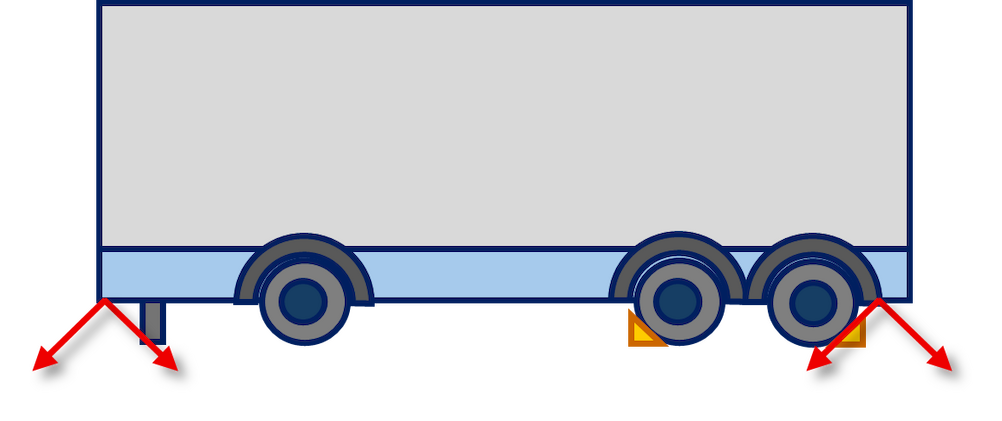
For trailers, lashing points should be fitted at the front and the rear, either 3 or 4 fixed points depending on the overall length, as shown in the below image:
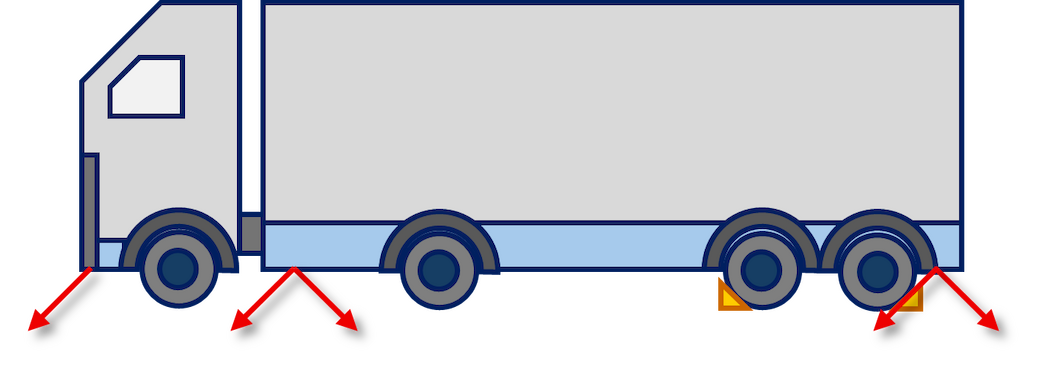
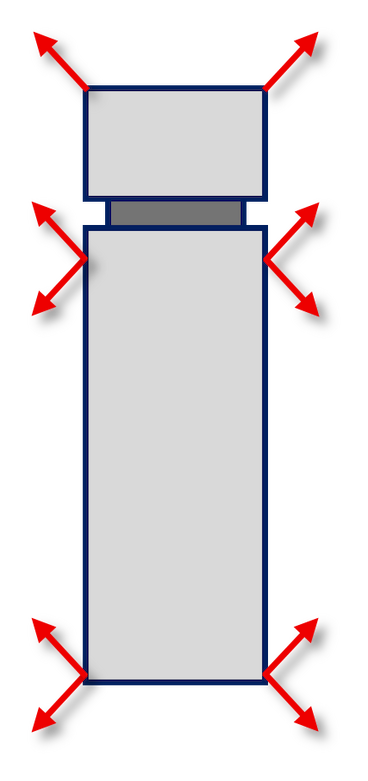
For towing units and trailers, there should be an additional lashing point on the front of the towing units as well at the 2 at the front and rear of the towed trailer. This is shown in the below images:
Details on securing points
· Each securing point on the vehicle chassis should be painted in a contrasting colour.
· Securing points on the vehicle should be so located as to ensure effective restraint of the vehicle by the lashings.
· Securing points should be capable of transferring the forces from the lashings to the chassis of the vehicle and should not be fitted to bumpers
· Securing points should be positioned in such a way that the angle between the lashing and the deck lies preferably between 30º and 60º.
· Securing points should be so located that lashings can be readily and safely attached, particularly where side-guards are fitted to the freight vehicle.
· The internal free passage of each securing point’s aperture should be not less than 80mm but the aperture need not be circular in shape.
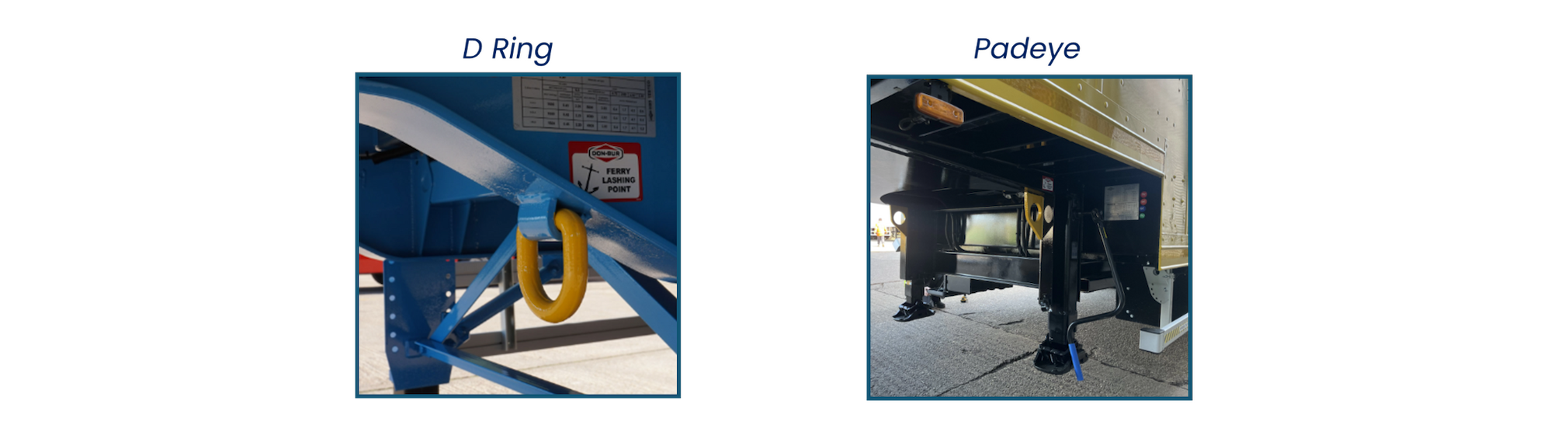
· The securing point needs to be designed for use IE pad eye or D rings welded in.
[i]Any vehicles which do not meet the requirements we request, may be refused travel at boarding. Drivers should be prepared for our crew to fully check all lashing points prior to boarding the vehicle.